

sEASONS
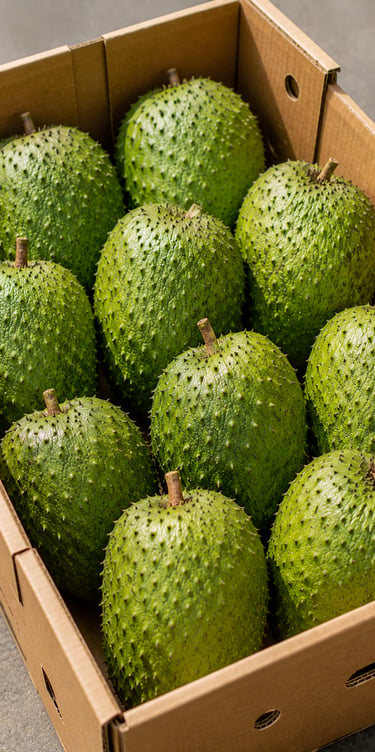
Soursop production is influenced by tropical growing conditions, with harvesting periods varying depending on regional climate patterns. In Vietnam, soursop is generally available throughout the year, with peak harvest seasons commonly occurring from May to November during warmer and wetter periods that support strong fruit development. In southern China, harvests are typically concentrated between summer and early autumn when temperatures and humidity are most favorable for tropical fruit production. In India, soursop trees usually produce fruit during the warmer months, with peak harvesting commonly taking place from June to September depending on local rainfall and regional climate conditions. These seasonal production cycles help ensure a stable supply of fresh fruit for soursop puree manufacturing while maintaining fruit quality, aroma, and flavor consistency.
Origin
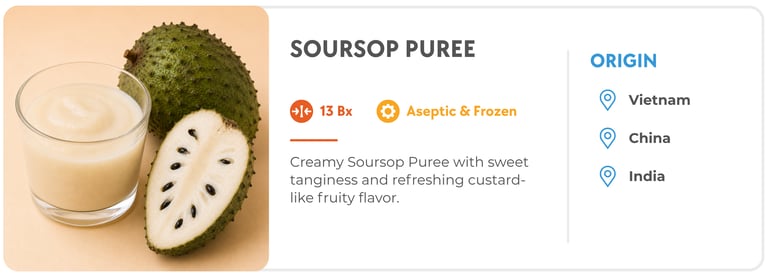
Soursop is widely cultivated in tropical and subtropical regions due to its adaptability to warm climates and high humidity conditions. Vietnam has become one of the important producers of soursop in Southeast Asia, supported by favorable tropical weather and expanding fruit cultivation industries focused on puree and processed fruit applications. China also contributes to soursop production, particularly in southern provinces with suitable subtropical climates that allow tropical fruit farming and processing development. In India, soursop cultivation continues to grow across several tropical regions where the fruit is valued for both fresh consumption and beverage processing. These countries collectively support the increasing global demand for soursop-based products, particularly in puree applications used across beverage, dessert, and dairy industries.

Nutritional Benefits
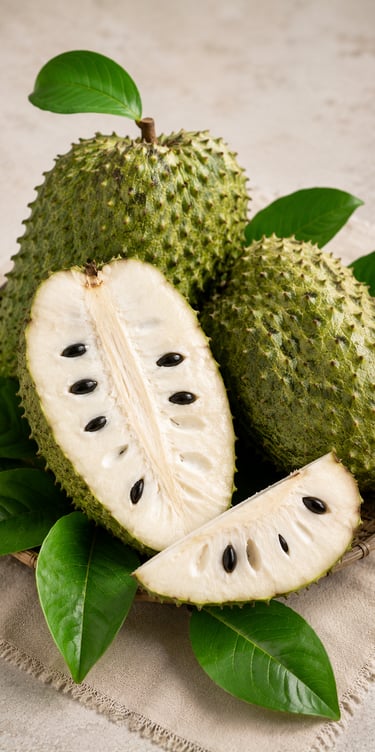
Soursop is recognized for its valuable nutritional composition, containing vitamin C, dietary fiber, potassium, magnesium, and various natural antioxidants. A typical serving of soursop provides vitamin C that contributes to immune support and antioxidant protection, while its dietary fiber content supports digestive health and overall nutritional balance. The fruit also contains naturally occurring polyphenols and plant compounds that are widely associated with antioxidant activity. In addition, soursop provides minerals such as potassium and magnesium, which contribute to normal body functions and electrolyte balance. Its combination of nutrients, tropical flavor, and naturally creamy texture makes soursop a widely utilized ingredient in food and beverage applications focused on both flavor and nutritional value.
Applications
Soursop puree is highly appreciated in the food and beverage industry for its creamy texture, naturally sweet-tart flavor, and distinctive tropical aroma that create a refreshing sensory experience. Its smooth consistency and exotic fruity profile make it particularly suitable for beverages, smoothies, desserts, dairy products, and frozen applications. Soursop puree is commonly used in juices, nectar drinks, yogurts, ice cream, sorbets, fruit preparations, and confectionery products where authentic tropical character and natural fruit texture are desired. The puree also blends well with other tropical fruits, allowing manufacturers to develop layered flavor profiles with a smooth and refreshing finish. Its naturally aromatic profile and soft creamy mouthfeel help brands create products with a unique tropical identity and strong consumer appeal.

Enquire
Reach out for enquiries about our products
Address
Golden Gardens Processed Food
7030 Ang Mo Kio Avenue 5
#08-80 Northstar
Singapore 569880
Contacts
Telephone: +65 6794 4559
Email: sales@ggpfood.com