

sEASONS
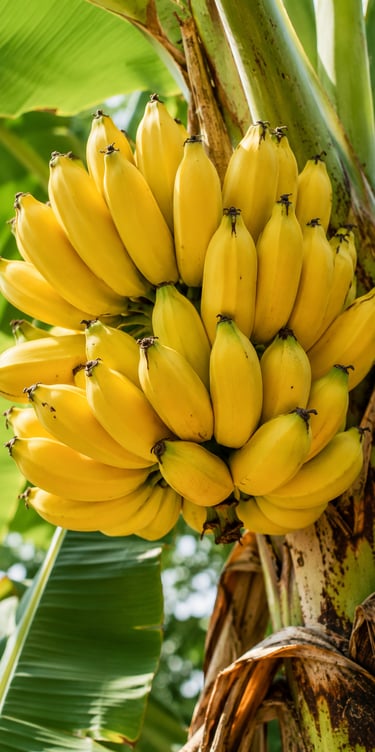
Banana juice production is closely tied to the banana growing season, which typically peaks during the warmer months. In tropical regions, bananas are harvested year-round, but the most abundant production occurs during the rainy season, from late spring to early fall. This period, marked by increased rainfall and consistent warmth, results in plump, sweet bananas that yield the best juice. The off-season, generally during the colder, drier months, sees a decrease in banana production, leading to less juice production. Thus, banana juice availability and quality are influenced by the timing of the harvests and regional climate variations.
Origin
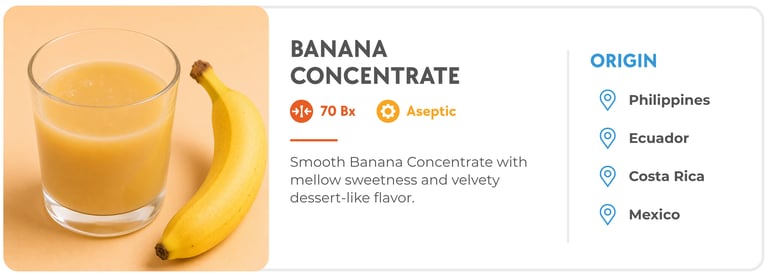
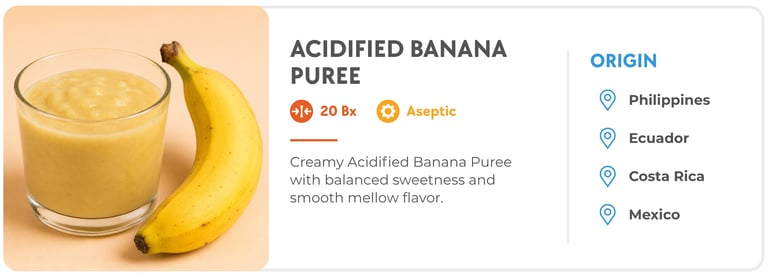
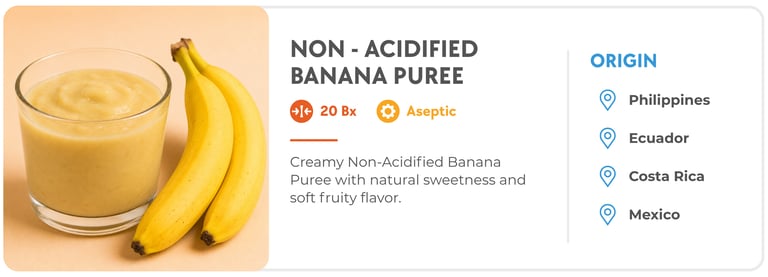
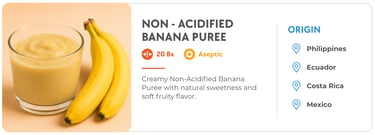
Banana juice products are primarily produced in tropical countries where bananas are abundant and widely cultivated. Leading producers include Costa Rica, the Philippines, and Ecuador, each renowned for their large-scale banana farming operations. Other notable producers are Brazil, Thailand, and India, which also harvest significant quantities of bananas for both domestic consumption and export. These countries utilize advanced processing methods to create banana juices, often blending the fruit with other ingredients like pineapple or coconut for unique flavor profiles. The high production of bananas in these regions makes banana juice products a popular commodity in both local and international markets.
Nutritional Benefits
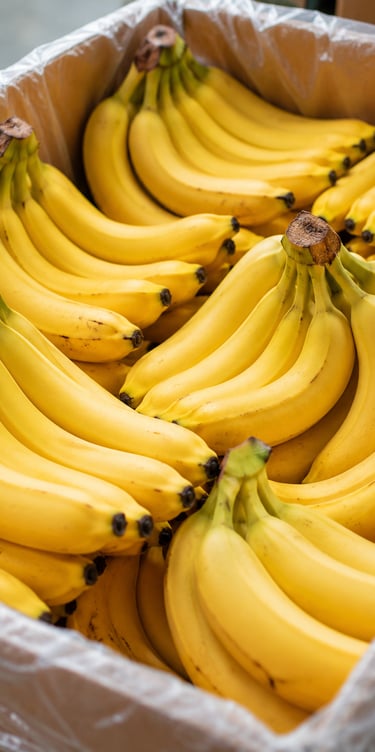
Banana is a nutrient-rich fruit containing carbohydrates, dietary fiber, potassium, vitamin B6, and vitamin C that contribute to its nutritional value. One medium banana generally provides around 350–450 mg of potassium and approximately 3 g of dietary fiber, supporting normal muscle function, hydration balance, and digestive health. Bananas also contain natural sugars, antioxidants, magnesium, and small amounts of folate and other B-complex vitamins, while their naturally soft texture and nutrient composition make them widely used across various food and beverage applications.
Applications
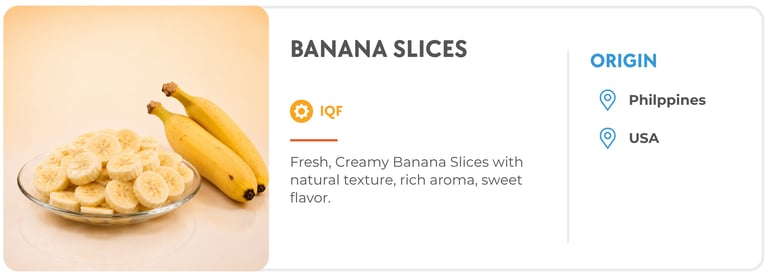
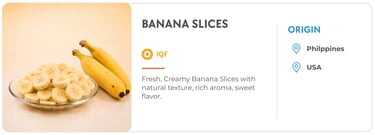
Banana concentrate, NFC (Not From Concentrate), and banana slices are widely used in the dairy industry to enhance creaminess, natural sweetness, and fruit texture in various applications. Banana concentrate is commonly incorporated into flavored milk, yogurt drinks, smoothies, ice cream, and dairy desserts due to its strong banana flavor, smooth consistency, and formulation efficiency. Banana NFC is mainly utilized in premium dairy beverages, cultured drinks, and clean-label smoothies, offering a fresher banana taste and more authentic fruit profile. Meanwhile, banana slices are popular in yogurts, frozen desserts, parfaits, breakfast dairy products, and ice cream inclusions, adding visible fruit pieces, soft texture, and a natural homemade appeal to the final product.
Enquire
Reach out for enquiries about our products
NFC AND PUREE


BANANA PUREE (ASEPTIC)
Philippines






BANANA PUREE (ASEPTIC)
Costa Rica
BANANA PUREE (ORGANIC)
Costa Rica
BANANA NFC AND PUREE
COUNTRY D
sEASONS
Banana juice production is closely tied to the banana growing season, which typically peaks during the warmer months. In tropical regions, bananas are harvested year-round, but the most abundant production occurs during the rainy season, from late spring to early fall. This period, marked by increased rainfall and consistent warmth, results in plump, sweet bananas that yield the best juice. The off-season, generally during the colder, drier months, sees a decrease in banana production, leading to less juice production. Thus, banana juice availability and quality are influenced by the timing of the harvests and regional climate variations.
Origin
Banana juice products are primarily produced in tropical countries where bananas are abundant and widely cultivated. Leading producers include Costa Rica, the Philippines, and Ecuador, each renowned for their large-scale banana farming operations. Other notable producers are Brazil, Thailand, and India, which also harvest significant quantities of bananas for both domestic consumption and export. These countries utilize advanced processing methods to create banana juices, often blending the fruit with other ingredients like pineapple or coconut for unique flavor profiles. The high production of bananas in these regions makes banana juice products a popular commodity in both local and international markets.


Enquiries
Feel free to reach out to us to inquire about availability and pricing. We’re here to assist you and provide all the information you need.


Address
Golden Gardens Processed Food
7030 Ang Mo Kio Avenue 5
#08-80 Northstar
Singapore 569880
Contacts
Telephone: +65 6794 4559
Email: sales@ggpfood.com