

sEASONS
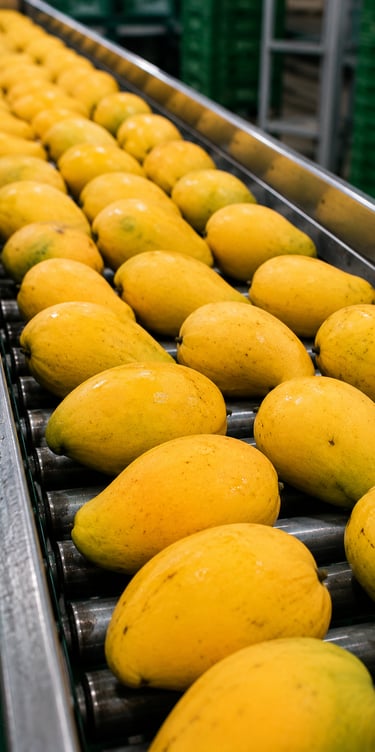
Mango juice production is closely tied to the mango harvesting seasons, which vary depending on the region. In tropical and subtropical areas, mangoes are typically harvested during late spring and summer. For instance, in India, one of the largest mango producers, the peak mango season runs from March to June. Similarly, in Mexico, harvesting occurs from April to September. During these months, the fruit is at its ripest, bursting with natural sweetness and flavor, making it ideal for juice production. In regions with multiple mango varieties, staggered harvesting times extend production, ensuring fresh mango juice remains available for several months.
Origin
Mango juice is produced in several countries where the fruit is abundantly grown, primarily in tropical and subtropical regions. India, the world’s largest producer of mangoes, leads the market in mango juice production. Other significant contributors include the Philippines, Thailand, and Indonesia, where mangoes thrive in the warm climates. In Latin America, Mexico is a major producer, followed by countries like Brazil and Guatemala. African nations such as Egypt and Kenya also contribute to the global mango juice industry. These countries utilize both local consumption and international export to meet the growing demand for refreshing mango beverages.
Nutritional Benefits
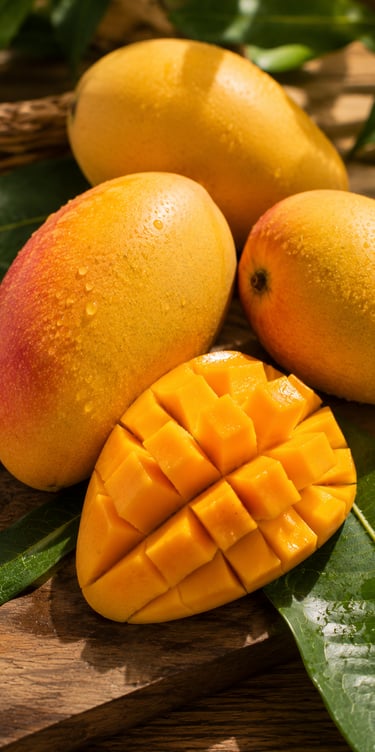
Mango is recognized as a nutrient-rich tropical fruit containing vitamin C, vitamin A, dietary fiber, potassium, and various natural antioxidants that contribute to its nutritional value. A serving of mango generally provides significant amounts of vitamin C and beta-carotene, supporting immune function, skin health, and antioxidant protection. Mango also contains dietary fiber, which contributes to digestive health, along with naturally occurring compounds such as polyphenols and carotenoids that are widely studied for their role in helping protect cells from oxidative stress. In addition, mango provides small amounts of vitamin E, folate, magnesium, and B-complex vitamins, making it a widely valued ingredient across various food and beverage applications.
Applications
In the dairy industry, mango concentrate and puree are widely appreciated for bringing a naturally creamy fruit profile, vibrant color, and indulgent tropical character to modern dairy creations. Mango puree is especially favored in yogurts, smoothie blends, frozen desserts, and cultured dairy products for its smooth texture and rich fruit body, helping create a fuller and more satisfying mouthfeel. Meanwhile, mango concentrate offers strong flavor consistency and formulation flexibility, making it ideal for flavored milk, dairy beverages, soft-serve ice cream, and large-scale production applications. Together, mango ingredients help manufacturers develop dairy products with a refreshing fruity identity, appealing aroma, and naturally sweet taste that resonates strongly with consumers seeking both comfort and tropical indulgence.

Enquire
Reach out for enquiries about our products
jUICE Concentrates


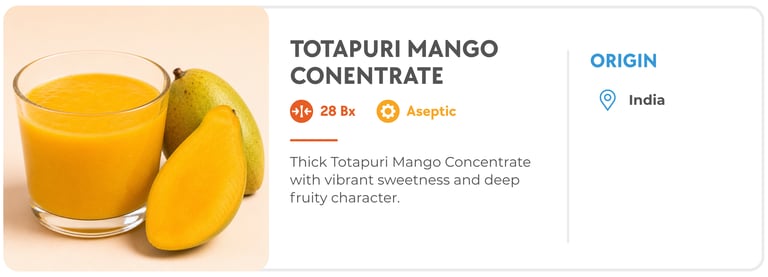
TOTAPURI MANGO CONCENTRATE
India






MANGO JUICE CONCENTRATE
COUNTRY B
MANGO JUICE CONCENTRATE
COUNTRY C
MANGO JUICE CONCENTRATE
COUNTRY D
NFC AND PUREE

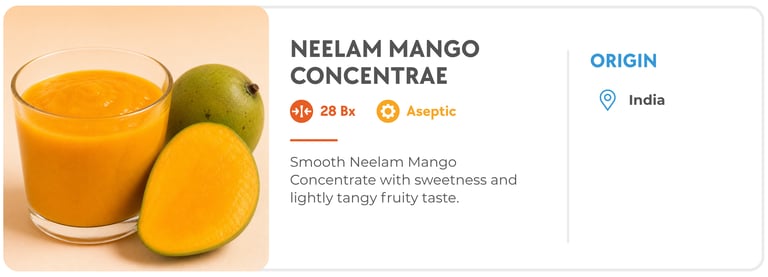
NEELAM MANGO PUREE
India




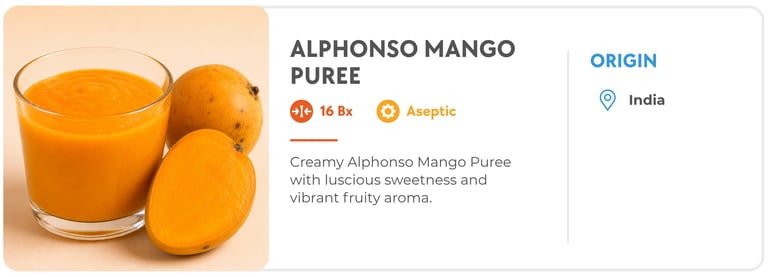
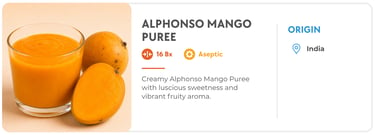
ALPHONSO MANGO PUREE (ORGANIC)
India
TOTAPURI MANGO PUREE (ORGANIC)
India
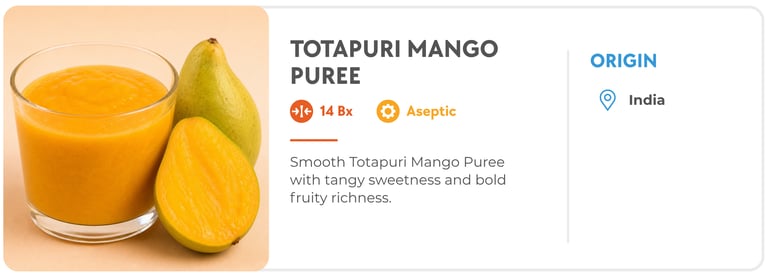
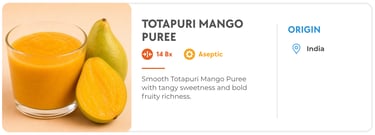
TOTAPURI MANGO PUREE
India
sEASONS
Mango juice production is closely tied to the mango harvesting seasons, which vary depending on the region. In tropical and subtropical areas, mangoes are typically harvested during late spring and summer. For instance, in India, one of the largest mango producers, the peak mango season runs from March to June. Similarly, in Mexico, harvesting occurs from April to September. During these months, the fruit is at its ripest, bursting with natural sweetness and flavor, making it ideal for juice production. In regions with multiple mango varieties, staggered harvesting times extend production, ensuring fresh mango juice remains available for several months.
Origin
Mango juice is produced in several countries where the fruit is abundantly grown, primarily in tropical and subtropical regions. India, the world’s largest producer of mangoes, leads the market in mango juice production. Other significant contributors include the Philippines, Thailand, and Indonesia, where mangoes thrive in the warm climates. In Latin America, Mexico is a major producer, followed by countries like Brazil and Guatemala. African nations such as Egypt and Kenya also contribute to the global mango juice industry. These countries utilize both local consumption and international export to meet the growing demand for refreshing mango beverages.

Enquiries
Feel free to reach out to us to inquire about availability and pricing. We’re here to assist you and provide all the information you need.
Address
Golden Gardens Processed Food
7030 Ang Mo Kio Avenue 5
#08-80 Northstar
Singapore 569880
Contacts
Telephone: +65 6794 4559
Email: sales@ggpfood.com