

sEASONS
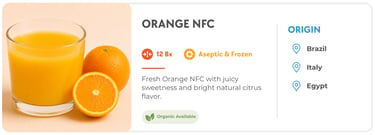
The production of orange juice is closely tied to the citrus growing seasons, which vary depending on the region. In Brazil, the world’s largest producer, the season typically runs from May to October, with peak harvesting occurring between June and August. In the United States, particularly Florida, the harvest season begins in late fall, around October, and stretches into early spring, peaking from December to March. Spain’s season runs from late autumn through winter, while other countries like South Africa and Argentina harvest oranges in the Southern Hemisphere’s summer months, between November and February. These varied seasons ensure a year-round supply of orange juice.
Origin
Orange juice production is predominantly led by Brazil, the world’s largest exporter and producer, thanks to its extensive orange groves and ideal growing conditions. The United States, particularly Florida, also plays a pivotal role, supplying a significant portion of global demand. Other countries such as Mexico, Spain, and India contribute to the orange juice market, with Spain being a major player in Europe. While the Mediterranean climate supports production in Spain, India’s growing demand and climatic conditions are fostering a rising industry. Argentina, South Africa, and Egypt are also emerging suppliers in the global orange juice trade.

Nutritional Benefits
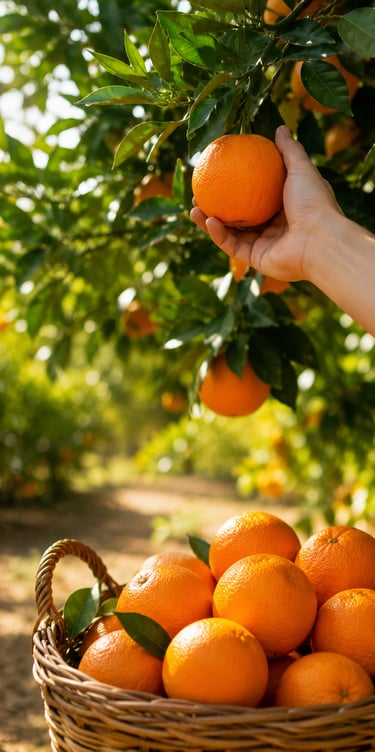
Orange is widely recognized as a nutrient-rich citrus fruit containing a variety of vitamins, minerals, and natural antioxidants. One medium orange generally provides around 70–95 mg of vitamin C, contributing significantly to the recommended daily intake and supporting immune function and antioxidant protection. Oranges also contain dietary fiber, potassium, folate, and B-complex vitamins, with a typical serving providing approximately 2.8–4.3 g of fiber and around 230–325 mg of potassium. In addition, oranges are naturally rich in flavonoids and antioxidant compounds such as hesperidin and beta-cryptoxanthin, which are associated with protection against oxidative stress and support overall wellness. Their high water content also contributes to hydration and freshness, making orange a valued ingredient across various food and beverage applications.
Applications
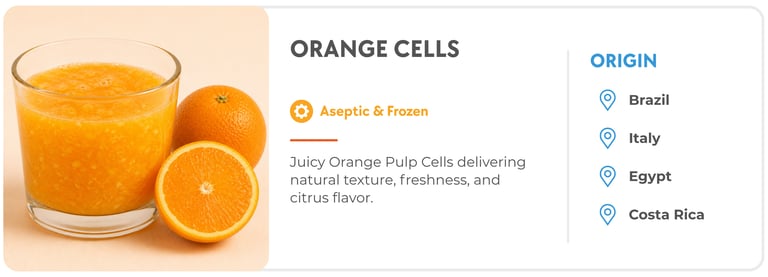
In the dairy industry, orange pulp, concentrate, and NFC are valued for enhancing both flavor complexity and product texture across a wide range of applications. Orange pulp is especially suitable for fruit-on-the-bottom yogurts, dairy fillings, frozen desserts, and smoothie bases, adding visible fruit content and natural texture. Orange juice concentrate is preferred in large-scale dairy beverage production due to its concentrated flavor, easy handling, and formulation flexibility in products such as milk drinks, soft-serve ice cream, and yogurt beverages. Orange NFC, on the other hand, is commonly chosen for premium and clean-label dairy products where a fresh-squeezed orange taste, natural aroma, and minimally processed image are important to the final consumer experience.


Enquire
Reach out for enquiries about our products
jUICE Concentrates


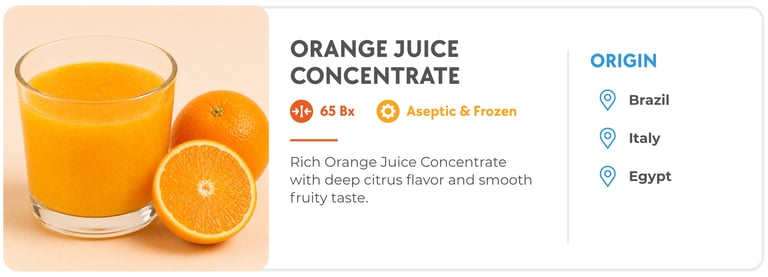
ORANGE JUICE CONCENTRATE (FROZEN)
Cyprus






ORANGE JUICE CONCENTRATE (FROZEN)
Egypt
ORANGE JUICE CONCENTRATE (FROZEN)
Egypt
ORANGE JUICE CONCENTRATE (FROZEN)
Egypt
NFC AND PUREE

ORANGE PULP CELLS (REGULAR)
Egypt




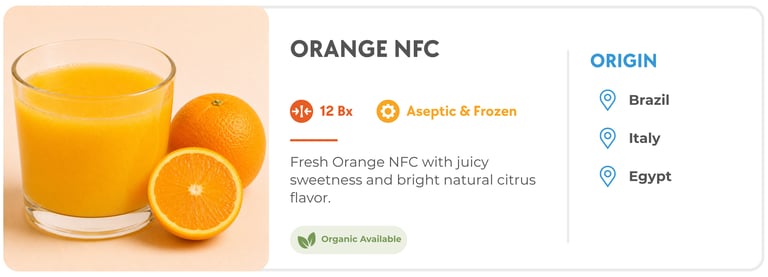
ORANGE NFC AND PUREE
COUNTRY B
ORANGE NFC AND PUREE
COUNTRY C
ORANGE NFC AND PUREE
COUNTRY D
Enquiries
Feel free to reach out to us to inquire about availability and pricing. We’re here to assist you and provide all the information you need.


Address
Golden Gardens Processed Food
7030 Ang Mo Kio Avenue 5
#08-80 Northstar
Singapore 569880
Contacts
Telephone: +65 6794 4559
Email: sales@ggpfood.com