

sEASONS
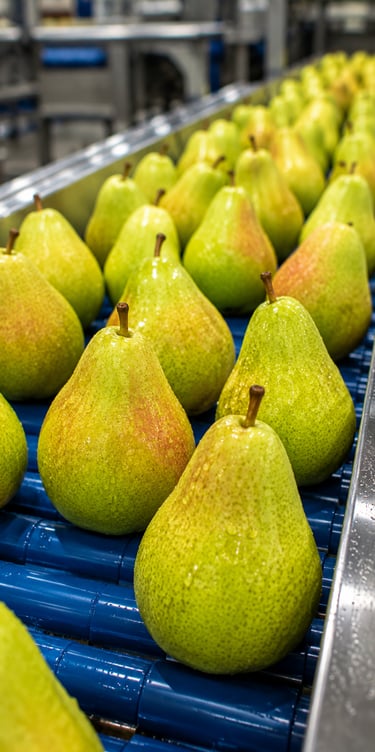
Pear juice production follows the natural rhythm of the pear harvest, with peak activity occurring during late summer and early autumn. Pears are typically harvested from August to October, depending on the variety and climate of the growing region. This period ensures the fruit is at its ripest, offering the best flavor and sweetness for juice extraction. Winter and spring are quieter seasons for production, as fresh pears are less available, though some producers rely on stored fruit or concentrate for off-season processing. By mid-summer, preparations begin anew, as orchards gear up for the next harvest and juice-making cycle.
Origin
Pear juice production is a global industry, with several countries excelling in its production due to favorable climates and abundant pear harvests. China stands as the leading producer, benefiting from its extensive pear orchards and advanced processing facilities. Italy, known for its rich agricultural tradition, also contributes significantly to pear juice production, particularly with varieties like Williams pears. The United States, especially regions like California, is another key producer, focusing on high-quality, commercially packaged pear juice. Additionally, Turkey, Argentina, and South Africa have emerged as notable producers, leveraging their diverse climates and growing demand for natural, fruit-based beverages in domestic and export markets.
Nutritional Benefits
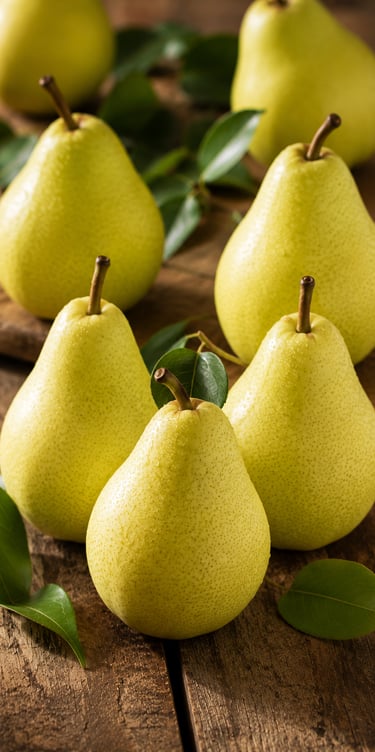
Pear contains a combination of naturally occurring nutrients and plant compounds that contribute to its overall nutritional profile. The fruit is known as a source of dietary fiber, particularly pectin, which is associated with digestive health and balanced nutrition. Pears also provide vitamin C, potassium, copper, and small amounts of vitamin K and folate that support normal body function. In addition, pears contain antioxidants and polyphenolic compounds, including flavonoids, which have been studied for their role in helping protect cells from oxidative stress. With their high water content and mild nutrient composition, pears are widely appreciated as a versatile fruit ingredient across various food and beverage applications.
Applications
Pear concentrate and puree bring a delicate sweetness and smooth fruit character that pair naturally with a wide range of dairy applications. Known for their mild and refreshing flavor profile, pear ingredients are often used to create balanced dairy products with a softer fruit identity that complements creamy textures without overpowering them. Pear puree is especially suitable for yogurts, smoothies, fruit preparations, and dairy desserts, contributing natural body and a velvety mouthfeel, while pear concentrate is valued in flavored milk, cultured beverages, and frozen dairy products for its consistent sweetness and formulation versatility. Their subtle aroma and clean fruit profile make pear ingredients an excellent choice for dairy brands seeking a refined, refreshing, and approachable consumer experience.
Enquire
Reach out for enquiries about our products
jUICE Concentrates


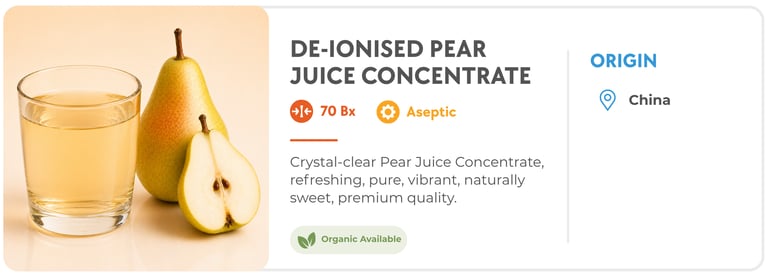
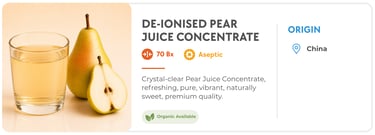
PEAR JUICE CONCENTRATE
COUNTRY A






PEAR JUICE CONCENTRATE
COUNTRY B
PEAR JUICE CONCENTRATE
COUNTRY C
PEAR JUICE CONCENTRATE
COUNTRY D
NFC AND PUREE

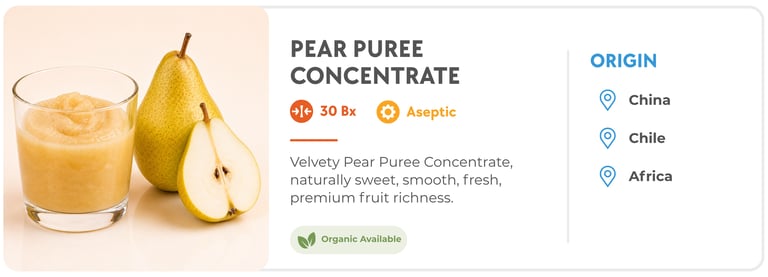
PEAR PUREE
Turkey




PEAR PUREE CONCENTRATE
Chile
PEAR NFC AND PUREE
COUNTRY C
PEAR NFC AND PUREE
COUNTRY D
sEASONS
Pear juice production follows the natural rhythm of the pear harvest, with peak activity occurring during late summer and early autumn. Pears are typically harvested from August to October, depending on the variety and climate of the growing region. This period ensures the fruit is at its ripest, offering the best flavor and sweetness for juice extraction. Winter and spring are quieter seasons for production, as fresh pears are less available, though some producers rely on stored fruit or concentrate for off-season processing. By mid-summer, preparations begin anew, as orchards gear up for the next harvest and juice-making cycle.
Origin
Pear juice production is a global industry, with several countries excelling in its production due to favorable climates and abundant pear harvests. China stands as the leading producer, benefiting from its extensive pear orchards and advanced processing facilities. Italy, known for its rich agricultural tradition, also contributes significantly to pear juice production, particularly with varieties like Williams pears. The United States, especially regions like California, is another key producer, focusing on high-quality, commercially packaged pear juice. Additionally, Turkey, Argentina, and South Africa have emerged as notable producers, leveraging their diverse climates and growing demand for natural, fruit-based beverages in domestic and export markets.


Enquiries
Feel free to reach out to us to inquire about availability and pricing. We’re here to assist you and provide all the information you need.


Address
Golden Gardens Processed Food
7030 Ang Mo Kio Avenue 5
#08-80 Northstar
Singapore 569880
Contacts
Telephone: +65 6794 4559
Email: sales@ggpfood.com